


Articles
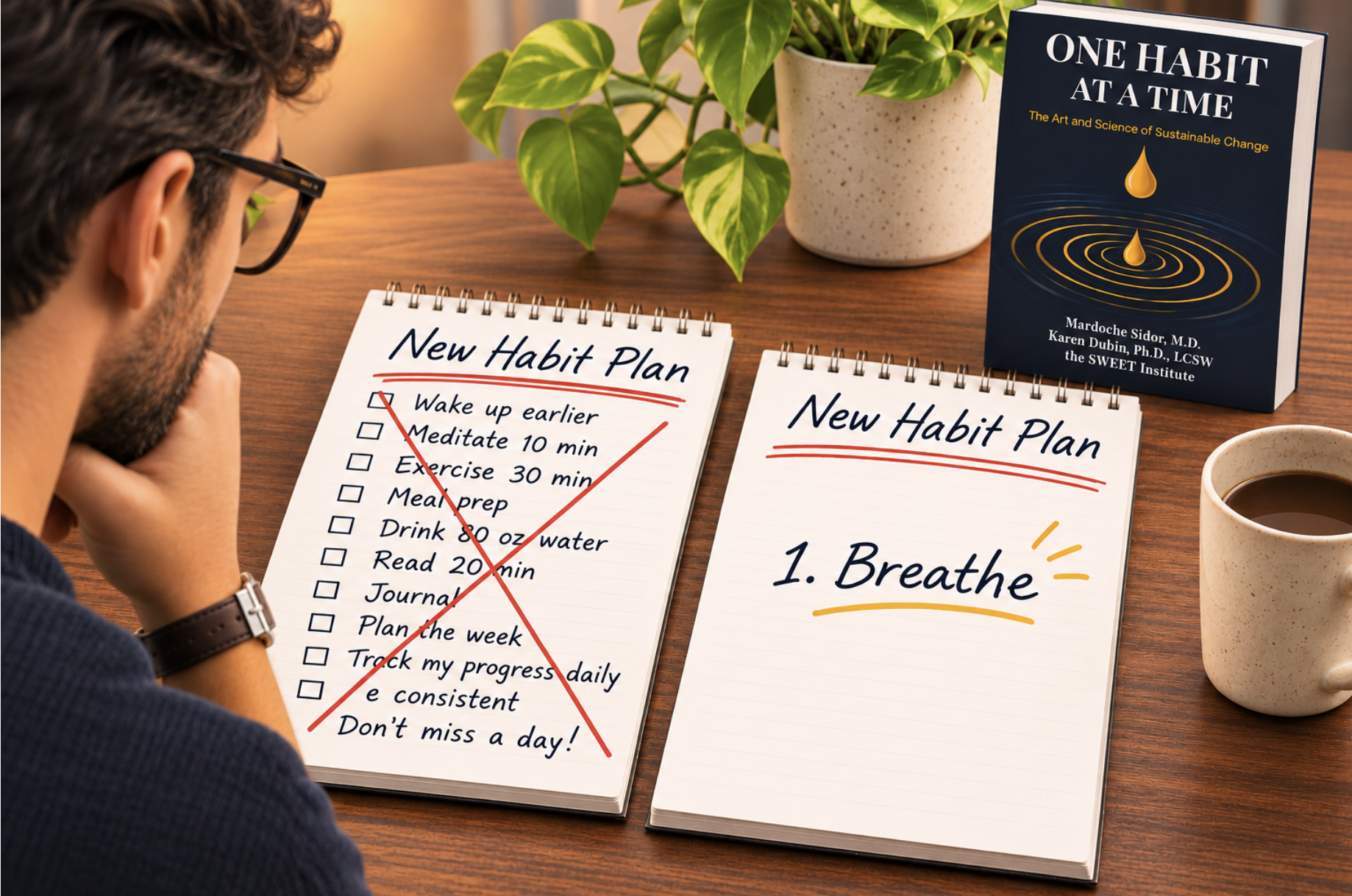
One Habit at a Time: Featured Book of the Week
Many people want to change their lives. They want to exercise regularly, meditate, read more, improve their relationships, manage their health, complete an important project, or become more disciplined.

The Agency Shift: How Bibliotherapy Helps Us Move From Feeling Powerless to Becoming Active Participants in Our Lives
There are moments when life seems to happen to us rather than with us. Decisions are made by others, circumstances change unexpectedly, opportunities disappear, and responsibilities accumulate.

Featured Book of the Week: The Psychiatric Nurse Practitioner’s Handbook
Psychiatric care requires knowledge. It requires diagnostic skill, clinical judgment, and a deep understanding of psychopharmacology.

The Possibility Shift: How Bibliotherapy Helps Us See Beyond the Limits We Have Learned to Accept
There are possibilities we never pursue, not because we have examined them and found them unsuitable, but because they have never occurred to us as realistic options. We grow up within families, communities, cultures, institutions, and circumstances that shape our understanding of what people like us can become.

Featured Book of the Week: Clinical Judgment - How Great Clinicians Think, Feel, Decide, and Become
Clinical decisions are rarely made from complete information. A patient describes symptoms, the chart provides diagnoses, laboratory results offer data, and treatment guidelines recommend possible interventions.

The Renewal Shift: How Bibliotherapy Helps Us Recognize That We Are Never Finished Becoming
There comes a moment when the life we have built begins to feel strangely unfamiliar. The career that once inspired us feels less meaningful. The routines that once provided stability begin to feel restrictive.

Featured Book of the Week: The Future Leaves Clues
What If the Future Becomes Visible Before It Becomes Obvious?
A crisis may appear sudden, yet the trajectory leading toward it often began much earlier. A missed appointment became two, responses became slower, conversations became shorter, and participation declined.

The Legacy Shift: How Bibliotherapy Helps Us Live Today in Ways That Outlast Tomorrow
Imagine that, many years from now, someone speaks about you. Perhaps it is your child, a former student, a colleague, a patient, a friend, or someone whose life briefly intersected with yours. What will they remember?

Featured Book of the Week: Deep Sleep
Sleep is one of the few essential human functions that cannot be accomplished through effort. The harder we try to force ourselves to sleep, the more alert we often become.

The Contribution Shift: How Bibliotherapy Helps Us Turn Personal Growth Into Meaningful Impact
Imagine spending years learning to become more compassionate, courageous, emotionally intelligent, and self-aware.

Featured Book of the Week - Deep Sleep
You lie down exhausted, yet your mind becomes more active. The unfinished conversation returns, tomorrow’s responsibilities begin rehearsing themselves, your body feels tense, your thoughts accelerate, and sleep becomes one more thing you are trying and failing to accomplish.

The Expression Shift: How Bibliotherapy Helps Us Give Form to What Is Alive Within Us
There may be a book inside you that has never been written, a conversation that has never been had, an apology that has never been spoken, a song that has never been sung, a business that has never been built, a boundary that has never been stated, a question that has never been asked, or a truth that has never been named.

Featured Book of the Week: Remembering: The Journey Back to the Pre-Conditioned Self
We spend much of our lives trying to improve ourselves. We work harder, learn more, correct our weaknesses, and attempt to become the person we believe we should be.

The Embodiment Shift: How Bibliotherapy Helps Us Stop Performing What We Believe and Start Living It
Most of us can describe the person we want to be: compassionate, patient, courageous, present, generous, emotionally intelligent, forgiving, or authentic. We may have read extensively about these qualities. We may teach them, speak about them, encourage them in others, and perhaps we have even written about them.

Featured Book of the Week: Life Is Not Hard
Life contains real hardship. People experience loss, illness, injustice, uncertainty, disappointment, and pain. Life Is Not Hard does not deny any of this.

The Integration Shift: How Bibliotherapy Helps Us Turn What We Know Into Who We Become
Knowing Is Not Yet Becoming
There are things we have understood for years.
We know we should set boundaries. We know sleep matters. We know relationships require communication

FEATURED BOOK OF THE WEEK: The Psychiatric Nurse Practitioner’s Handbook
Psychiatric practice asks clinicians to know a great deal: diagnosis, psychopharmacology, assessment, and risk. Clinicians also need to know: neuroscience, psychotherapy, medical comorbidity, documentation, ethics, and systems of care.

The Consistency Shift: How Bibliotherapy Helps Us Stop Starting Over and Start Becoming Through Repetition
You may not need another Beginning. Of course, there is something seductive about beginning: Monday, January 1, the first day of the month. A new notebook, a new program, a new book, a new plan, a new declaration that this time will be different.

FEATURED BOOK OF THE WEEK: Rewriting the Script
Long after a painful experience ends, its language can remain.
What was said to us can become what we say to ourselves.

The Commitment Shift
We decided to exercise, write, change how we eat, or spend more time with the people we love. We decided to establish a boundary, stop returning to a relationship that repeatedly hurt us, become more present, or save money.