

The Shame Shift: How Bibliotherapy Helps People Step Out of Self-Blame, Heal Invisible Wounds, and Reclaim Their Inner Voice

“There’s Something Wrong With Me.”
The Reader didn’t say it loudly. They said it like a conclusion. “I don’t always know what it is. But when something goes wrong…my first thought is: It must be me.”
Dr. Dubin leaned forward gently. “That voice is familiar to many people.”
Dr. Sidor: “Shame is the internalized belief that one is fundamentally flawed or unworthy of belonging” (Brown, 2006). “Guilt says, ‘I did something wrong.’ Shame says, ‘I am wrong.’”
Shame Thrives in Silence
That’s how shame survives. It grows in secrecy and isolation. Chronic shame is linked to depression, anxiety, and low self-worth. (Tangney & Dearing, 2002).
Where Shame Learns Its Language
Repeated criticism or invalidation can teach people to internalize blame. Shame is learned — not proof.
Why Positive Thinking Doesn’t Heal Shame
You don’t out-think shame. You out-experience it.
How Bibliotherapy Interrupts Shame
Stories reduce shame by helping people feel less alone (Mar & Oatley, 2008). Shame dissolves in shared humanity.
The Existential Layer
You were responding to pain — not proving defect.
Reflection Prompts
When is your inner voice most critical?
Whose voice does it resemble?
What changes when compassion replaces criticism?
Selected References
Brown, Brené. Shame Resilience Theory: A Grounded Theory Study on Women and Shame. 2006.
Mar, Raymond A., and Keith Oatley. “The Function of Fiction Is the Abstraction and Simulation of Social Experience.” Perspectives on Psychological Science, vol. 3, no. 3, 2008, pp. 173–192.
Tangney, June Price, and Ronda L. Dearing. Shame and Guilt. Guilford Press, 2002.
SWEET CALL TO ACTION
Always Enough: The Transformational Power of Unconditional Positive Regard (SWEET Institute Publishing)
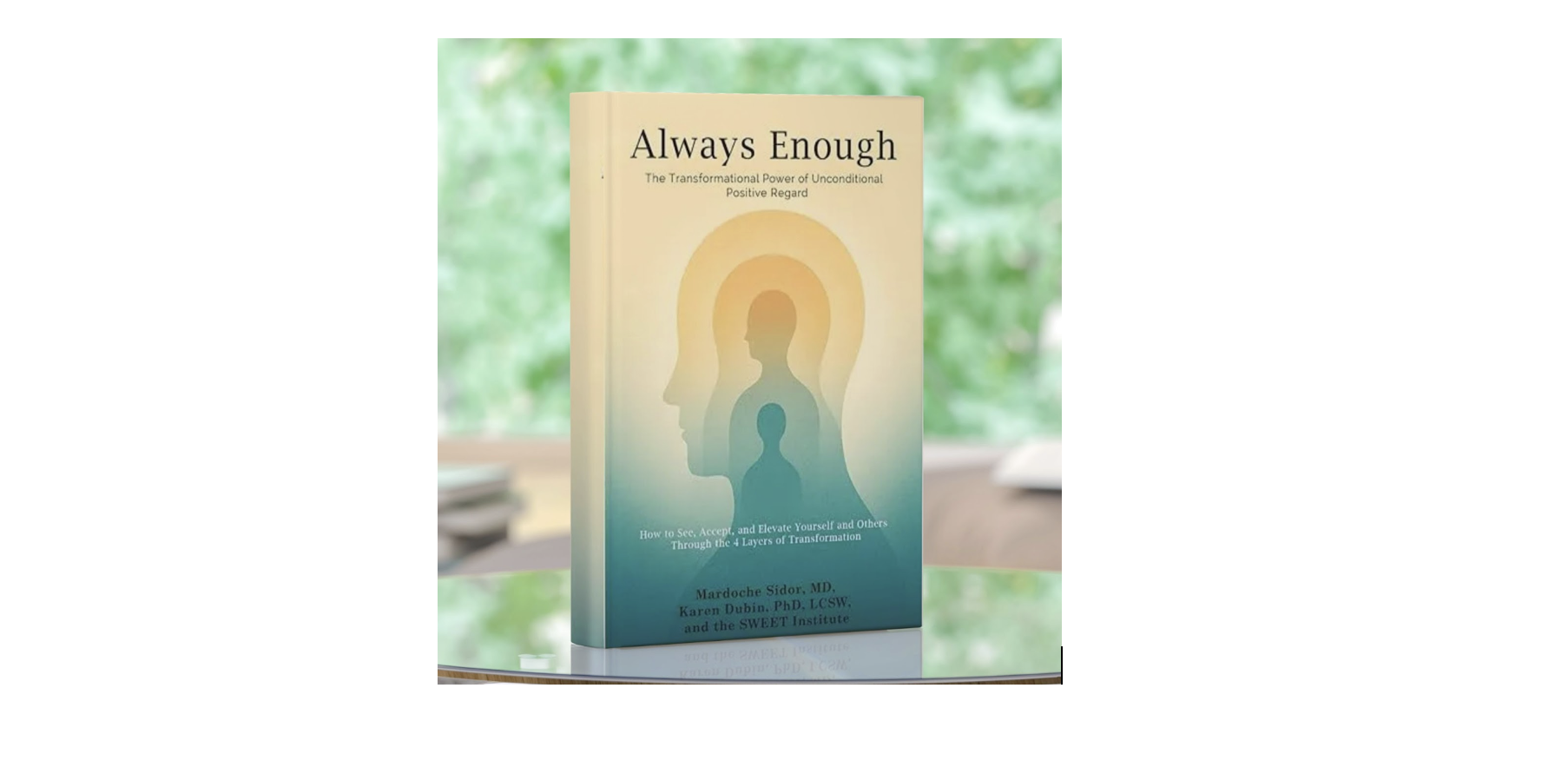
Get your copy TODAY at SWEET Institute Publishing.
You’re not just buying a book. You’re supporting a humane mental health movement.