

Why We Get Hooked—and How We Truly Heal
A person may know that alcohol is damaging their health, opioids are threatening their life, gambling is destroying their finances, or compulsive eating is deepening their shame, and still return to the behavior.
From the outside, this can appear irrational. Why would someone continue doing something that is clearly causing harm?
Addictive behavior is not always senseless. It may be destructive, yet it often serves a function. It may temporarily reduce anxiety, numb grief, quiet traumatic memories, relieve loneliness, create stimulation, provide belonging, or offer an escape from an internal experience that feels unbearable.
This does not make the behavior harmless. It makes the behavior understandable.
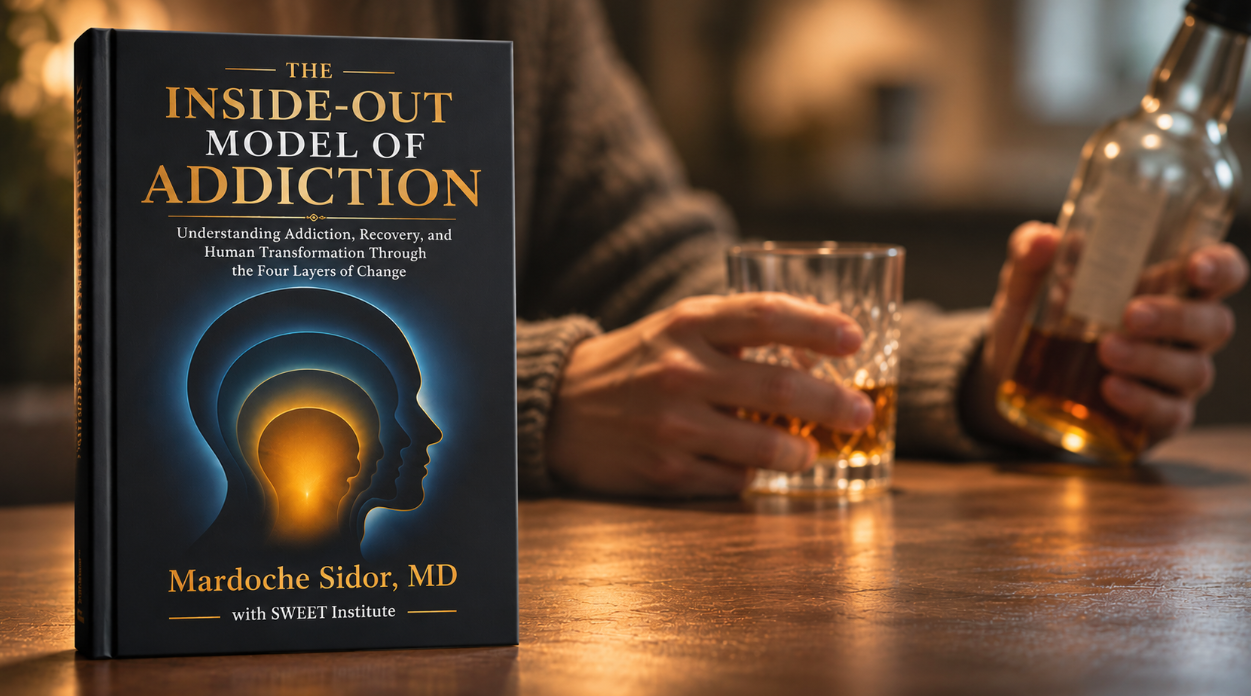
That is where The Inside-Out Model of Addiction begins.
What This Book Reveals
The Inside-Out Model of Addiction asks a deeper question than “How do we stop the behavior?” It asks: “What internal suffering makes the behavior feel necessary?”
The disease model of addiction helped move society away from moral condemnation and toward treatment. Neuroscience has deepened our understanding of reward, salience, stress, learning, motivation, and executive control. Psychological, relational, and social models have shown how trauma, attachment, environment, access, poverty, isolation, and opportunity influence addiction.
The Inside-Out Model integrates these perspectives while recognizing that no single explanation is sufficient. Addiction unfolds across biological, psychological, relational, environmental, and existential domains. Healing ought to therefore become equally multidimensional.
Through the Four Layers of Transformation, the book examines cravings, habits, and behavioral choices at the conscious layer; schemas, conditioning, and attachment patterns at the preconscious layer; defenses, trauma, conflict, and unprocessed emotional material at the unconscious layer; and meaning, freedom, responsibility, identity, and purpose at the existential layer.
The behavior is visible.
The suffering it regulates may not be.
The Core Insight
Addiction is rarely the primary problem. More often, it is an attempted solution.
If treatment removes a person’s most reliable method of regulation without understanding what that method was regulating, we may leave the person with the original pain and fewer ways to manage it.
This is why abstinence, although essential for many people, is not the whole of recovery. A person may stop using a substance while remaining trapped in shame, loneliness, fear, fragmentation, or meaninglessness.
True recovery involves more than removing the object of addiction. It requires helping the person develop safer ways to stabilize the body, understand the mind, experience emotions, build relationships, meet legitimate needs, face painful truths, and create a life worth remaining present for.
Recovery is not merely the end of use. It is the beginning of integration.
A Line That Holds the Whole Book
“Do not ask only what the person is using. Ask what the use is helping the person survive.”
SWEET Call to Action
Think of one behavior you repeatedly judge, in yourself or in someone else.
Instead of asking only, “Why do you keep doing this?” ask: “What happens immediately before it? What feeling, thought, bodily state, relationship, memory, or situation does the behavior change? What does it provide, prevent, or help the person escape?”
Understanding the function does not mean approving the harm. It allows us to address the suffering and the behavior rather than fighting the behavior while leaving its purpose untouched.
When we understand what the addiction has been doing for the person, we can begin helping the person discover something safer, deeper, and more sustainable to do in its place.
We do not heal simply by taking away the escape.
We heal by helping people build lives they no longer need to escape.
— SWEET Institute Publishing
Transformational Books for a Transformational World