

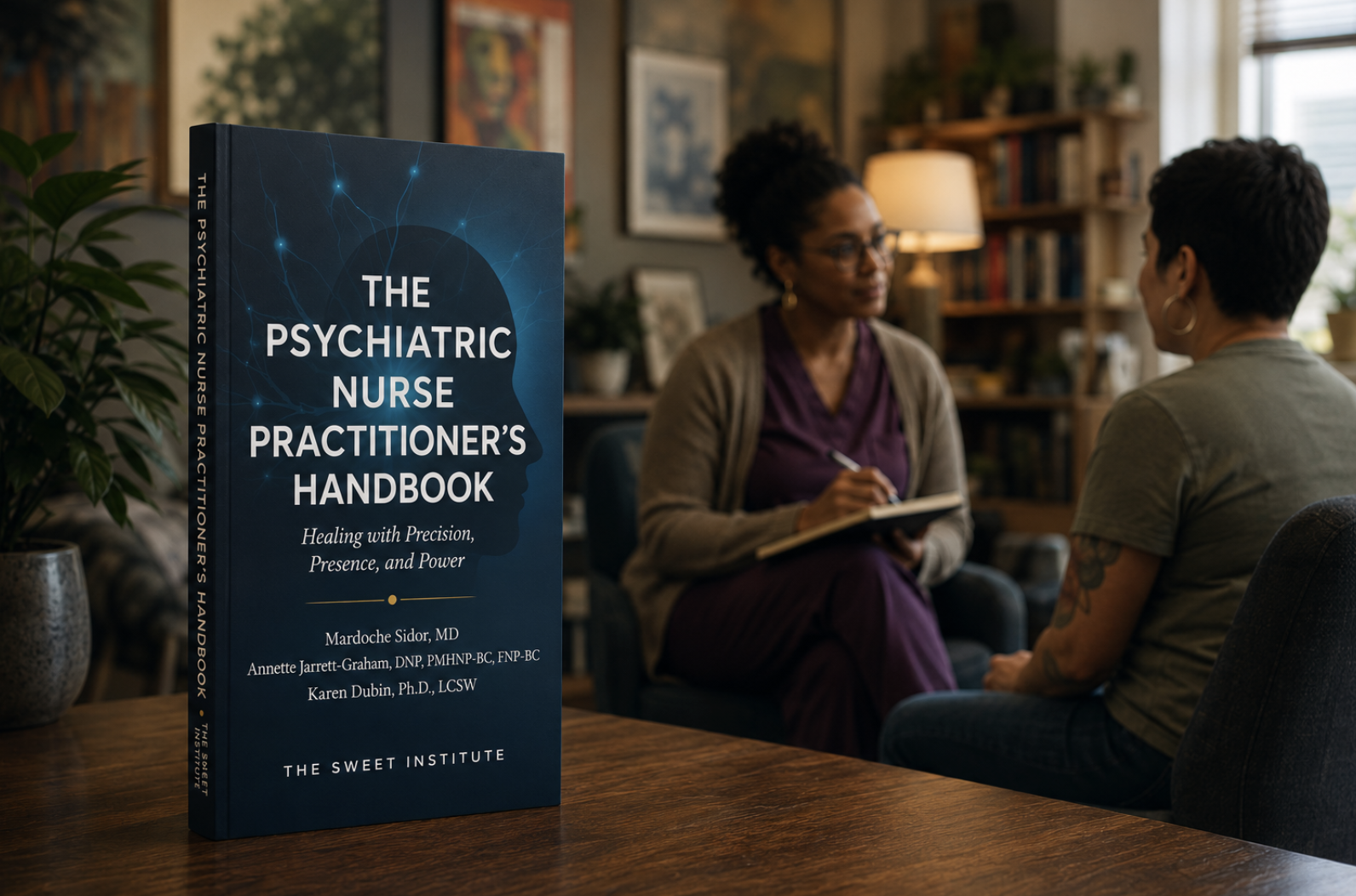
Psychiatric care requires knowledge. It requires diagnostic skill, clinical judgment, and a deep understanding of psychopharmacology. Yet knowledge alone does not create healing. A clinician may know every diagnostic criterion, understand every medication pathway, and follow every treatment guideline while still failing to reach the human being sitting across from them.
The Psychiatric Nurse Practitioner’s Handbook challenges clinicians to move beyond the mechanical practice of psychiatry. It presents psychiatric care as both a science and a relationship, one that requires technical precision, emotional presence, disciplined curiosity, and the humility to recognize that no diagnosis can ever tell the whole story of a person.
What This Book Reveals
Symptoms matter, but symptoms do not exist in isolation. They emerge within a person’s history, relationships, culture, biology, environment, and search for meaning. When clinicians focus exclusively on eliminating symptoms, they may overlook the conditions that produced the suffering and the strengths that could help transform it.
This book reveals that psychiatric excellence is not found in choosing between science and compassion. It is found in bringing them together. Precision without presence can feel cold and transactional. Presence without precision may feel caring but remain clinically insufficient. The psychiatric nurse practitioner must learn to offer both.
A thoughtful diagnosis can provide direction, but it is not to become a cage. Medication can reduce suffering, but it is not to replace understanding. Treatment planning can organize care, but it needs to remain collaborative enough to honor the patient’s voice, priorities, and lived experience.
The Core Insight
The central message of this book is simple: The best psychiatric care occurs when clinical expertise meets genuine human presence.
Healing begins when patients experience themselves as more than a collection of symptoms. They need to know that their clinician is not merely assessing them, but seeing them; not merely prescribing for them, but thinking with them; not merely managing their condition, but remaining curious about the person they are becoming.
This requires the clinician to tolerate uncertainty. It means resisting the pressure to reach conclusions too quickly. It means asking one more question, listening beneath the first answer, and recognizing that what appears to be resistance may be fear, what looks like noncompliance may be hopelessness, and what seems irrational may make perfect sense within the patient’s history.
The psychiatric nurse practitioner’s power does not come from having all the answers. It comes from knowing how to remain present while the right questions, and the person’s deeper truth, gradually emerge.
A Line That Holds the Whole Book
“Clinical excellence is not simply knowing more. It is knowing deeply, seeing fully, and remaining present enough to understand the person behind the symptoms.”
SWEET Call to Action
During your next clinical encounter, pause before forming your conclusion. Look beyond the diagnosis, the medication list, and the presenting complaint. Ask yourself:
“What would I understand differently if I saw the whole person instead of only the symptoms?”
Then listen, not only for what confirms what you already believe, but for what could transform your understanding.
Psychiatric care reaches its highest form when precision guides the work, presence humanizes it, and compassion gives it meaning.
Know the science, see the person, honor both.
— SWEET Institute Publishing
Transformational Books for a Transformational World.