

The Team Shift: Why Teams Don’t Transform through Motivation, but Through Shared Practice, Language, and Culture

“Why Does Every Team Meeting Feel Like We’re Starting Over?”
The Reader laughed, but looked exhausted. He added, “We have meetings, we review expectations, and discuss communication. Yet, somehow, the same issues keep coming back.”
Dr. Dubin nodded slowly. “That happens in many organizations.”
Dr. Sidor: “Teams do not transform through occasional conversations; rather, they transform through repeated shared practice.”
Why Teams Drift Back Into Dysfunction
Systems naturally drift toward familiar patterns unless new behaviors are consistently reinforced. Under stress, teams default to habit instead of intention, and the hidden problem is often a lack of shared language, and when teams lack shared language around communication, accountability, validation, and leadership, consistency breaks down.
Why Bibliotherapy Works Across Teams
Books create repeated exposure to shared ideas, frameworks, and language. They become cultural anchors and help clarify the difference between information and integration. In other words, training introduces concepts, while integration requires repetition, reflection, accountability, and application. This, in turn, takes place at the Existential Layer, where culture is repeated behavior and where repeated behavior creates identity.
Reflection Prompts
What conversations keep repeating in your organization?
Where is there a lack of alignment?
What behaviors are consistently reinforced?
SWEET CALL TO ACTION
Because of Us: Why Outcomes Change When We Do
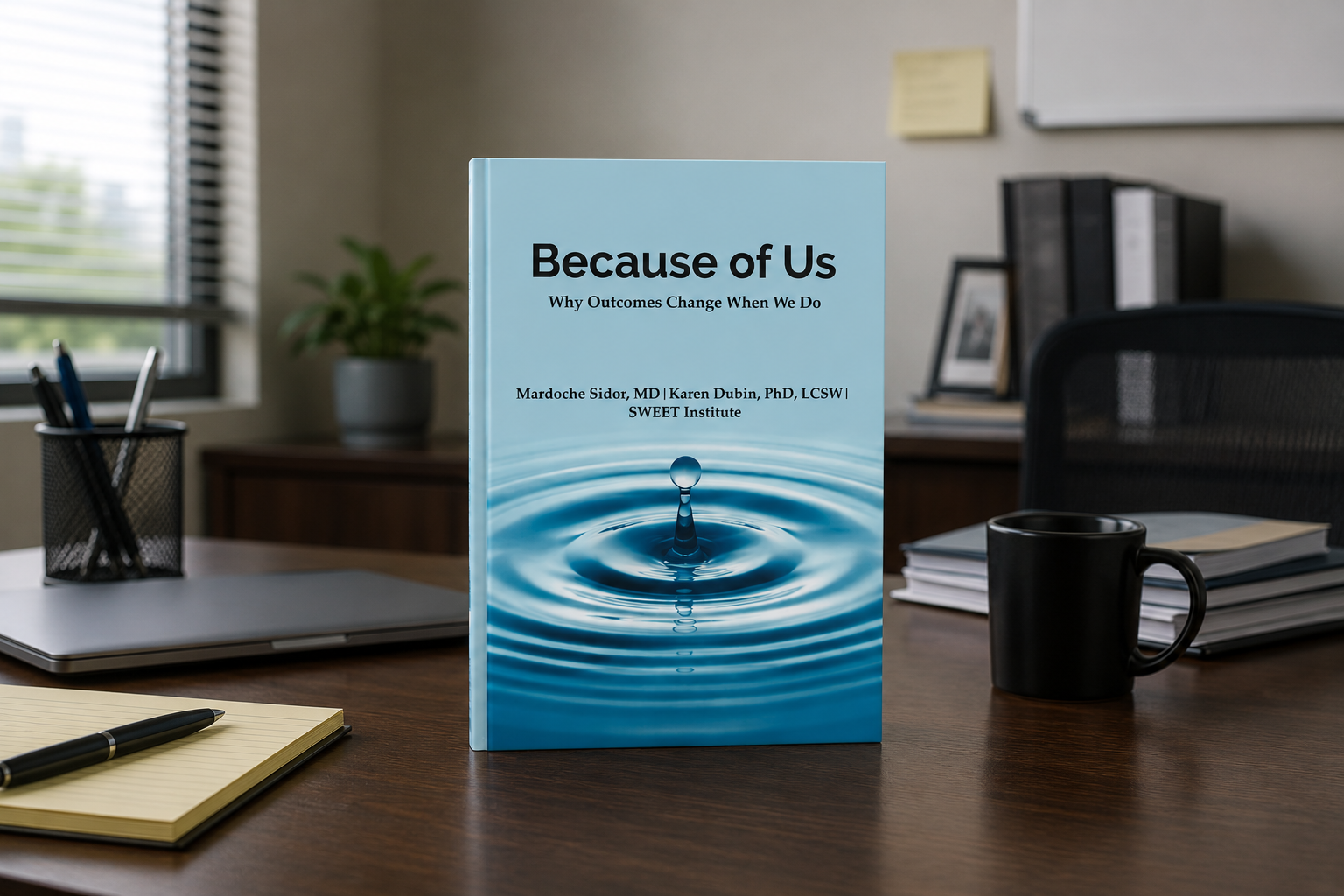
Get your copy TODAY at SWEET Institute Publishing.
Culture changes through repetition, not reminders. As such, SWEET for Agencies offers:
Leadership systems
Communication frameworks
Implementation support
Sustainable transformation
Bring SWEET to your organization.